What Happens When Commercial Refrigeration Fails?
Refrigeration keeps modern business moving. From supermarkets and food manufacturers to pharmaceutical companies and major events, thousands of operations rely on precise temperature control every single day. When that control disappears, the consequences arrive fast.
A single refrigeration failure can spoil stock, breach regulations, and damage hard-earned customer relationships within hours. The good news is that most of this disruption is avoidable with the right contingency planning.
What causes commercial refrigeration to fail?
Refrigeration systems are complex, and failure rarely comes from a single source. Understanding the common causes helps you plan for them.
Equipment breakdown: Compressors, condensers, and seals all wear over time. A worn component can fail without warning, shutting down an entire unit.
Power issues: Refrigeration units draw significant power. Outages, surges, or faulty supply can stop a system dead.
Human error: Doors left open, incorrect temperature settings and improper loading all compromise performance.
Maintenance neglect: Skipped servicing allows small faults to become major failures.
Extreme weather: Heatwaves place units under heavy strain, while severe cold and storms can disrupt power and equipment alike.
The real cost of refrigeration downtime
The impact of a failure extends far beyond a broken unit. Businesses face a chain of financial and operational consequences.
Stock loss: Perishable goods, from frozen food to temperature-sensitive pharmaceuticals, can be ruined in hours.
Regulatory risks: Food and pharmaceutical businesses must meet strict temperature standards. A breach can trigger fines and compliance investigations.
Lost revenue: Halted production or empty shelves directly reduce income.
Reputational damage: Failed deliveries and unavailable products erode customer trust.
Supply chain disruption: One failure can delay orders across an entire network of suppliers and clients.
Which industries are most vulnerable to refrigeration failure?
Some sectors face far higher stakes when refrigeration fails:
Food and beverage: Supermarkets, wholesalers and manufacturers depend on constant cold storage for perishable stock.
Pharmaceuticals: Vaccines, medicines and research products often require tightly controlled temperatures.
Healthcare: Hospitals and laboratories store sensitive materials that cannot be compromised.
Logistics: Distribution centres and ports rely on reliable temperature control to keep goods moving.
Events and hospitality: Festivals, sporting events and venues need dependable storage to serve large crowds at peak demand.
Why every business needs a refrigeration contingency plan
A contingency plan is not an optional extra. It is a core part of sound risk management. Businesses that plan ahead protect their inventory, maintain business continuity and avoid the panic that comes with an unexpected failure.
The principle is simple. Identify where a failure could hurt your operation, then put a backup solution in place before you need it. A clear plan means you can act within hours rather than scrambling for a solution while stock spoils.
How temporary refrigerated storage minimises disruption
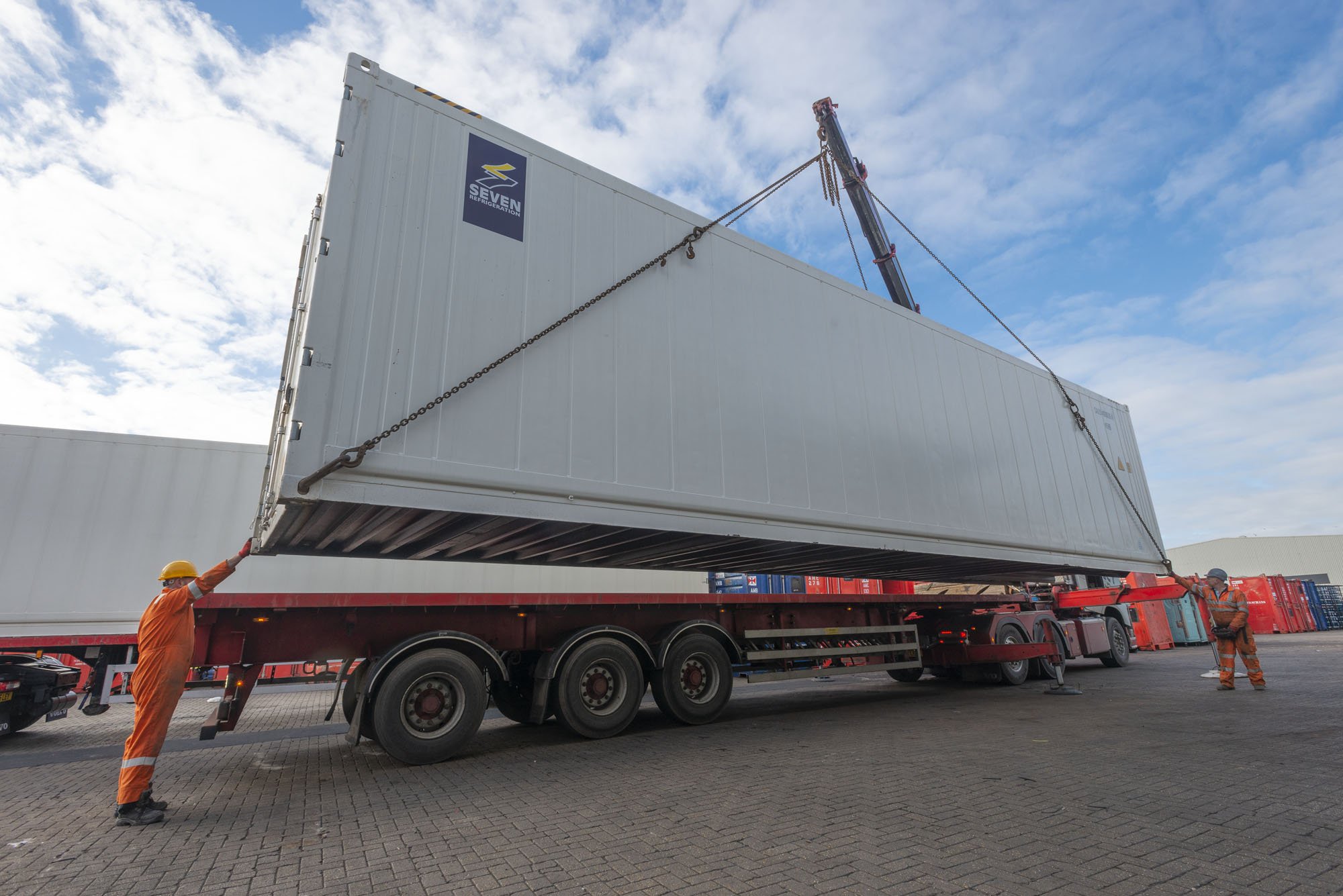
Temporary refrigerated storage gives businesses a fast, reliable way to protect stock when their own equipment fails or capacity runs short. Seven Refrigeration provides temperature-controlled storage solutions nationwide, offering the flexibility businesses need in an emergency.
Key benefits include:
Rapid deployment: With a network of depots across the United Kingdom and nationwide delivery, units can reach you quickly.
Flexible capacity: Choose from 20ft and 40ft refrigerated containers to match your exact storage needs. Our 20ft refrigerated containers hold up to 8 UK pallets, while our 40ft units hold up to 18.
Temperature monitoring: All on-hire units include a bespoke telematics system at no extra cost, allowing you to track and monitor conditions remotely.
Short and long-term hire: Flexible rental terms cover everything from a brief emergency to sustained seasonal demand.
Explore the full range of refrigeration services to find the right fit for your operation.
Signs you need backup refrigeration capacity
Certain situations make backup capacity a sensible investment. Watch for these indicators:
Seasonal peaks: Winter and Christmas often push supermarkets and suppliers to full capacity.
Planned maintenance: Servicing existing units creates a temporary gap in storage.
Expansion periods: Growing demand can outpace your current equipment.
Ageing equipment: Older units carry a higher risk of failure and benefit from a reliable backup.
How Seven Refrigeration supports businesses during emergencies
With over 25 years of industry experience, Seven Refrigeration helps businesses respond quickly when refrigeration fails. Our service is built around speed, flexibility and expert support.
Nationwide delivery from a network of depots across the United Kingdom
Flexible rental terms, from short-term emergency cover to long-term contracts
Temperature-controlled containers suited to food, pharmaceuticals, logistics and events
Experienced engineering support from a dedicated team of qualified engineers
Storage solutions for multiple sectors, including supermarkets, wholesalers and major UK venues
Plan before the failure happens
Refrigeration failure is rarely convenient, but it does not have to be catastrophic. Businesses that prepare a contingency plan protect their stock, their compliance record and their reputation. The best time to review your plan is now, before an emergency forces your hand.
If you want a reliable backup ready when you need it, contact Seven Refrigeration to discuss your requirements.